In today’s digital world, data centers are the unsung heroes. They power everything from our streaming services and online shopping to critical business operations and cloud computing. But what keeps them running when the power goes out? The answer is a special device called a UPS, or Uninterruptible Power Supply.
You might have a small UPS for your home computer, a little box that gives you a few minutes to save your work during a blackout. A data center UPS operates on the same basic principle, but on a massively larger and more complex scale. It’s not just about backup. It’s about pristine, continuous, and reliable power, as well as the importance of regular UPS maintenance.
But how does it actually work? Let’s peel back the layers.
Why Is Uninterrupted Power So Critical for Data Centers?
Before diving into the “how,” it’s crucial to understand the “why.” For a data center, a power interruption isn’t a minor inconvenience. It’s a potential catastrophe.
The High Cost of Downtime (Data Loss, Financial Impact, Reputation)
Imagine a major bank, an e-commerce giant, or a healthcare provider suddenly going offline. The consequences go far beyond inconvenience. Active transactions can be corrupted, and unsaved data can be lost, leading to significant data loss. Studies on data center uptime consistently show that outages remain costly events, often resulting in six- or seven-figure losses when downtime, recovery efforts, and operational disruption are combined. Power issues continue to be one of the most common causes of major data center outages.
These financial impacts include lost revenue, wasted productivity, and the cost of recovery efforts. Beyond dollars, reputation damage can be severe when customers cannot access critical services. When a business goes offline, trust can erode, and restoring credibility can be a long, difficult process.
“In our decades of experience at Camali Corp, we’ve seen firsthand that a robust UPS system isn’t just a backup plan. It’s the lifeline of a data center,” says Hadi Fakouri, CEO of Camali Corp. “It’s the critical shield against not only blackouts but the far more common and insidious power quality issues that can degrade equipment and corrupt data over time. Investing in the right UPS is investing in business continuity.”
Beyond Blackouts: Protecting Against “Dirty Power”
While full blackouts are the most visible threat, data centers face constant power quality issues that can be just as damaging. “Dirty power” refers to fluctuations and disturbances coming from the utility grid. These include voltage sags, often called brownouts, which cause temporary drops in power. They also include surges or spikes, which are short bursts of high voltage, along with electrical noise from electromagnetic or radio frequency interference. In some cases, frequency variations can occur when power drifts away from the standard 50 Hz or 60 Hz.
Sensitive IT equipment is designed to operate within very tight tolerances. Continuous exposure to dirty power can lead to mysterious glitches, premature hardware failure, and data corruption, even if there’s no complete outage. A data center UPS plays a vital role in “cleaning” or “conditioning” this power.
The Heart of a Data Center UPS: How Power Flows and Transforms
A data center UPS acts as a power conditioning and backup system, taking raw utility power, cleaning it, storing energy in batteries, and delivering stable AC power to sensitive IT equipment. In demanding environments, the most common design is the online double-conversion UPS, which provides continuous protection by isolating equipment from utility power issues. This is the gold standard because it provides the highest level of protection. Here’s how it works, component by component.
Meet the Key Players: Rectifier, Batteries, Inverter, Bypass Switch
1. Rectifier: This part is where power enters the UPS. It changes the power from AC (alternating current) to DC (direct current). This DC power does two things: it charges the UPS batteries and supplies power to the inverter.
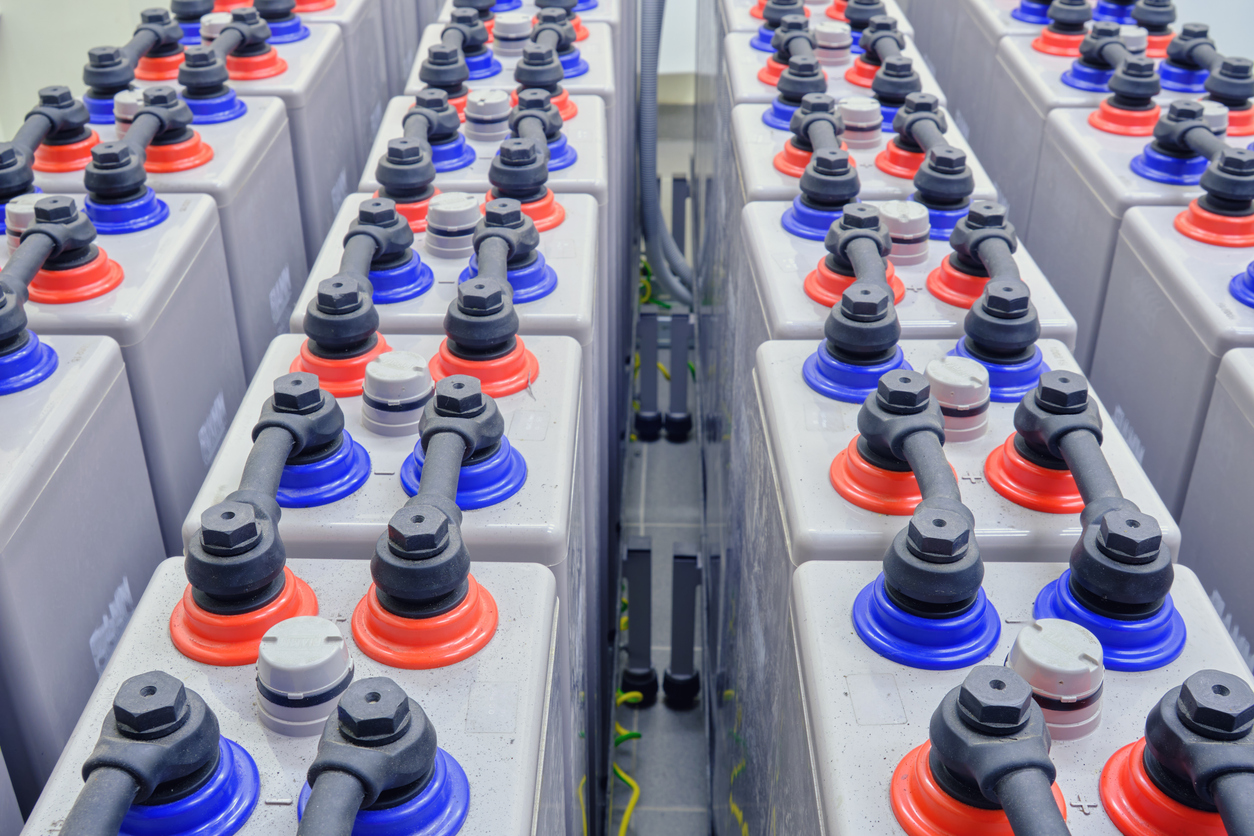
2. Batteries: These are the energy storage components. Rows upon rows of powerful batteries (often lead-acid or increasingly, lithium-ion) stand ready to discharge their stored DC power the instant the rectifier senses a problem with the incoming utility AC power.
3. Inverter: This part is one of the most important. It helps keep the power clean and steady. The inverter takes the DC power (either from the rectifier or the batteries) and converts it back into perfectly clean and stable AC power, precisely at the voltage and frequency required by the data center’s IT equipment (servers, storage, networking gear).
4. Static Bypass Switch (or Maintenance Bypass): This is a crucial safety and reliability feature. If the UPS itself experiences a major fault or needs to be taken offline for maintenance, the static bypass switch can automatically and instantaneously transfer the IT load directly to the utility power (or another backup source), ensuring the equipment keeps running, though without the UPS’s conditioning and backup features during that bypass period.
Stage 1: Cleaning Up Incoming Power (The Rectifier’s Role)
When utility power enters the data center, it first passes through the rectifier. The rectifier converts incoming AC power into DC power, which is required by the battery system and the inverter. Modern rectifiers also perform power factor correction, improving efficiency and reducing electrical strain on the facility. During this process, the rectifier provides an initial layer of filtering that helps protect downstream equipment from certain surges and electrical noise. By converting AC to DC, the rectifier isolates critical IT systems from many imperfections in raw utility power.
Stage 2: The Ever-Ready Backup (The Battery System)
The DC power produced by the rectifier keeps the batteries fully charged at all times. When the UPS detects a voltage sag, surge, or complete utility power loss, the batteries immediately begin supplying DC power to the inverter with no interruption. Battery runtime depends on the size of the battery bank and the connected load and typically ranges from minutes to hours. This runtime is designed to support generator startup or allow for a controlled shutdown if an outage lasts longer than expected.
Stage 3: Creating Perfect, Stable Power (The Inverter’s Job)
The inverter converts DC power back into clean, stable AC power that data center equipment can safely use. It precisely regulates output voltage and frequency to match IT requirements, such as 120V, 208V, or 230V at 50Hz or 60Hz. Because servers and networking equipment always operate on inverter-generated power in an online double-conversion UPS, they are fully isolated from sags, surges, electrical noise, and frequency variations. This constant AC-to-DC and DC-to-AC process is what defines an online UPS.
The Safety Net: Automatic Bypass Switch
If the UPS experiences an internal fault or overload, the static bypass switch instantly transfers the IT load to an alternate power source, usually the raw utility input. This transfer happens fast enough that equipment does not detect an interruption. During planned maintenance, a maintenance bypass allows technicians to service the UPS while systems remain powered. Once work is complete, the load is smoothly transferred back to the UPS, helping maintain uptime even when the UPS itself requires attention.
Not All UPS Systems Are Created Equal: Common Types in Data Centers
While online double-conversion UPS systems offer the highest level of protection, other UPS types are sometimes used in smaller facilities or for less critical applications. The right choice depends on how sensitive the equipment is and how much risk the operation can tolerate.
Online Double-Conversion: The Gold Standard for Critical Loads
As detailed above, this type offers the highest level of protection by completely isolating the load from the raw utility power. In this design, servers and networking equipment always run on power regenerated by the inverter, not directly from the utility. This eliminates transfer time during outages and protects against sags, surges, electrical noise, and frequency variations. The tradeoff is higher cost and slightly lower efficiency due to constant power conversion, although modern systems have greatly improved efficiency. Online double-conversion UPS systems are best suited for mission-critical servers, storage arrays, and network infrastructure that cannot tolerate even brief interruptions or poor power quality.
Line-Interactive: A Balance for Less Sensitive Equipment
Line-interactive UPS systems continuously monitor incoming utility voltage and adjust it using an internal autotransformer. This allows the system to correct common voltage sags and swells without switching to battery power. The batteries and inverter engage only during larger power disturbances or outages. These systems are more efficient and less expensive than online double-conversion UPS units, but they do introduce a short transfer time when switching to battery. While most modern IT equipment can tolerate this delay, line-interactive UPS systems do not provide the same level of isolation from electrical noise or frequency variations. They are commonly used for departmental servers, network closets, and non-critical IT equipment.
Standby (Offline): Basic Protection
This is the simplest and least expensive type. During normal operation, connected equipment runs directly on utility power. When an outage occurs, the UPS switches to battery power through the inverter. These systems are inexpensive and efficient during normal conditions, but they have noticeable transfer times and provide minimal power conditioning beyond basic surge protection. Because of these limitations, standby UPS systems are generally limited to individual workstations, point-of-sale systems, or very small, non-critical applications and are rarely appropriate for core data center environments.
For most data centers Camali Corp designs and services, critical electrical services like online double-conversion UPS systems are standard to ensure maximum reliability.
Beyond Backup: Added Benefits of a Modern Data Center UPS
A modern data center UPS is more than just a big battery. It’s a sophisticated power management system.
Power Conditioning and Quality
As emphasized, the ability to provide clean, stable power free of sags, surges, and noise is a primary benefit, extending equipment life and preventing data errors. This is a continuous process in an online UPS.
Scalability for Future Growth
Many data center UPS systems are modular. This means you can add more power modules or battery modules as your data center’s load grows, allowing for a “pay-as-you-grow” approach. This makes it easier to grow without buying too much equipment at the start.
Integration with Monitoring and Management Systems
Modern UPS systems come with advanced communication capabilities. They can integrate with Data Center Infrastructure Management (DCIM) software, providing real-time monitoring of power status, battery health, load levels, and environmental conditions. This allows data center operators to:
- Receive alerts for potential issues.
- Track energy consumption.
- Manage remote shutdowns.
- Schedule proactive UPS maintenance and repair.
Ensuring Your UPS Delivers: Key Considerations & Maintenance
Installing a UPS is a significant step, but it’s not a “set it and forget it” solution.
Right-Sizing Your UPS Solution
Choosing a UPS that’s too small means it won’t be able to support your critical load during an outage. Too large, and you’re wasting capital and potentially operating inefficiently. Proper sizing involves calculating the total power consumption (in kVA or kW) of all equipment to be protected, considering future growth, and understanding the desired runtime. This is a key part of designing your data center’s power infrastructure.
The Importance of Regular Maintenance and Testing
UPS batteries don’t last forever. Most last 3–5 years, though some types last longer. Capacitors and fans also need periodic replacement. Regular maintenance should include:
- Visual inspections.
- Battery testing (impedance, discharge tests).
- Load testing of the UPS.
- Checking connections and cleaning components.
- Firmware updates.
The U.S. Department of Energy emphasizes the importance of efficient power management in data centers, and a well-maintained UPS contributes to this. You can find more on data center efficiency at the Department of Energy’s website.
Partnering with Experts for Reliability
Understanding, selecting, installing, and maintaining a data center UPS system requires specialized knowledge. Partnering with experienced critical power professionals, like the team at Camali Corp, ensures that your UPS is correctly specified, installed, and maintained for optimal performance and longevity. We help you navigate the complexities of N+1 redundancy, modularity, and integration to build a truly resilient power backbone.
A data center UPS is a complex, hardworking system that stands as the silent guardian of your digital world. By understanding how it diligently converts, conditions, and supplies power, you can better appreciate its vital role in ensuring the lights, and the data, always stay on.