Everything is running normally until it isn’t. One unexpected power loss is all it takes to stop equipment mid-cycle, drop servers offline, and put safety systems at risk. For industrial and commercial facilities, even a brief outage can interrupt operations and create downtime costs that escalate fast.
A standby generator can prevent these losses, yet many facility managers hesitate because they’ve heard installation “takes forever.” It doesn’t, if you know what to expect.
At Camali Corp, we design and install commercial generator systems for manufacturing plants, warehouses, and other critical facilities. In this guide, we break down the real-world installation timeline, the six core phases involved, and what actually determines how quickly your facility can get powered up.
Most projects land between five and ten weeks from signed proposal to go-live. Below, we unpack each milestone, the common wild cards that slow projects down, and how to keep your own timeline tight.
6 Key Phases in a Commercial Generator Installation Timeline
| Phase | Task | Typical Duration |
| 1 | Site assessment & load calculation | 1–2 weeks |
| 2 | Permitting & utility approval | 2–6 weeks |
| 3 | Concrete pad & fuel infrastructure | 3–5 days |
| 4 | Delivery & rigging | 1 day |
| 5 | Electrical & gas hook-up | 2–4 days |
| 6 | Commissioning, testing & training | 1–2 days |
1. Site Assessment & Load Calculation (1–2 Weeks)
Every project starts with gathering the right data. Our engineers walk through your building, look at one-line electrical diagrams, and review your last 12 months of utility bills. We measure peak kVA (the highest amount of electricity your building uses) to make sure the generator is the right size, not too small and not too costly. Most delays happen when teams don’t have their energy statements ready, so it’s smart to gather drawings and bills in advance.
2. Permitting & Utility Approval (2–6 Weeks)
Next, we send signed and sealed engineering plans to the Authority Having Jurisdiction (AHJ) and the local utility company for approval. This is required before connecting your generator to the grid. In smaller towns, permits may take just 10 days. In big cities like Newark or Queens, it can take up to 6 weeks, especially if you need permits for street work or emissions checks.
Tip: Schedule a pre-submittal meeting with the building inspector. A 30-minute call now avoids rework later.
Want to see how generators fit into larger designs? Learn more about Data Center Design. You can also check FEMA’s emergency power best practices for compliance guidance.
3. Concrete Pad & Fuel Infrastructure (3–5 Days)
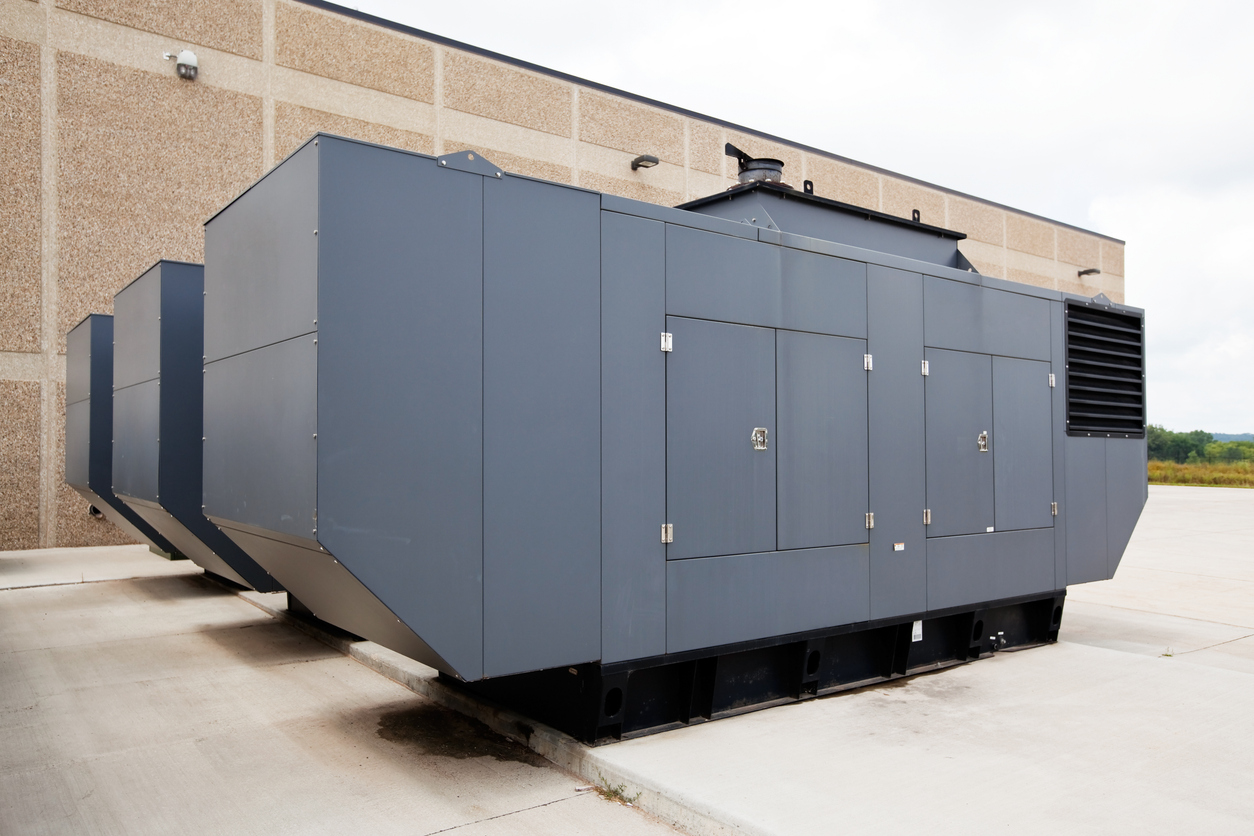
Once permits are approved, construction begins. We dig, frame, and pour an 18-inch-thick, rebar-reinforced concrete pad based on your generator’s size. If your system uses diesel fuel, we also install a UL-listed sub-base tank (a fuel tank that sits under the generator) or place steel posts (bollards) around an above-ground tank for safety.
The concrete needs to cure for about 48 hours before we can place the generator. Cold weather may delay curing by a day or two.
4. Delivery & Rigging (1 Day)
The generator is delivered from the manufacturer or a nearby distributor. A mobile rigging crew, trained workers who lift and install the generator using a crane, handles the setup. If needed, they block off traffic, attach a spreader bar (a tool that helps balance the unit), and safely lift the generator into place. Most installs take less than four hours. The only common delay is if the street-closure permit hasn’t been approved ahead of time.
5. Electrical & Gas Hook-Up (2–4 Days)
Our licensed electricians install conduits (protective pipes for wiring), pull feeder cables, and mount the automatic transfer switch (ATS), the device that switches your power to the generator during an outage. For larger systems, we may install paralleling gear (equipment that connects multiple generators) or work with medium-voltage cables.
For natural gas generators, we need at least 2 psi of gas pressure. If your supply is lower, the gas company may need to upgrade your service while we work.
6. Commissioning, Testing & Training (1–2 Days)
Finally, factory-certified technicians run a two-hour load-bank test to check if the generator performs at full power. They also complete the NFPA 110 acceptance checklist, a national safety checklist for emergency power systems. Before we leave, we train your team on how to run weekly exercise procedures. Once the utility signs off, the system flips to “Auto,” so it’s ready when you need it.
Factors and Planning Timelines for Commercial Generator Installation
What Slows a Project Down?
Several factors can extend a commercial generator installation timeline. Permitting backlogs are one of the most common issues, especially in municipalities that review applications only once a month. Custom-order generators also add time. A non-stock 600 kW diesel unit can take 10 to 14 weeks to ship from the factory. Weather plays a role as well. Heavy rain can delay excavation, and freezing temperatures can slow concrete curing. Unexpected infrastructure issues, such as buried utilities or asbestos panels, often lead to change orders. Late design changes are another frequent cause of delays. Moving the generator pad after drawings are stamped usually restarts the permit review process.
Typical Commercial Generator Installation Timelines
The examples below show how commercial generator installation timelines typically unfold based on Camali Corp project experience. Actual schedules vary depending on permitting speed, generator availability, utility coordination, and site conditions.
Example 1: Healthcare Facility Generator Installation
A healthcare facility required a 200 kW natural gas generator to support life safety systems and essential loads. The installation was completed in just over five weeks. The timeline stayed on track because the generator model was readily available, the project reused an existing concrete pad, and permit plans were reviewed early by the local authority having jurisdiction.
Example 2: Industrial Facility Generator Installation
An industrial facility installed a 400 kW diesel generator with paralleling gear, which allows multiple generators to operate together. The total project timeline extended to just over nine weeks. The schedule increased due to a required short-circuit study, a custom sound-attenuated enclosure with extended lead time, and weather delays during the concrete pour.
Five Ways to Shorten Your Generator Installation Timeline
| # | Action | Time Saved |
| 1 | Book a pre-planning call with the AHJ | 5–10 days |
| 2 | Choose an in-stock generator model | 4–8 weeks |
| 3 | Bundle pad, electrical, and fuel scopes under one contract | 3–5 days |
| 4 | Provide complete utility bills and drawings on day one | 1 week |
| 5 | Arrange a rental generator for critical operations during cut-over | Eliminates downtime risk |
ROI: Why Speed Pays
A mid-size manufacturer averaging $15,000 per hour in throughput can lose $360,000 in a single 24-hour outage. Compressing install time from ten weeks to six saves four weeks of exposure. Even if the odds of an outage are low, the risk-adjusted savings justify fast-tracking.
Frequently Asked Questions
Can installation happen without shutting down operations?
Yes. We schedule cut-overs during planned maintenance windows or overnight. A portable generator keeps mission-critical loads energized.
Does a larger generator always take longer to install?
Not automatically. Permit and utility review times drive the schedule more than kW size. A 500 kW in a small township can finish sooner than a 150 kW in midtown Manhattan.
How soon should we engage Camali Corp?
Ninety days ahead of your busy season provides cushion for permits and any OEM lead time.
Ready To Move Forward?
If power loss equals lost profit, waiting isn’t an option. Book a free site survey with Camali Corp today, and we’ll deliver a personalized timeline in 48 hours. Request a quote or give us a call at (949) 580-0250.