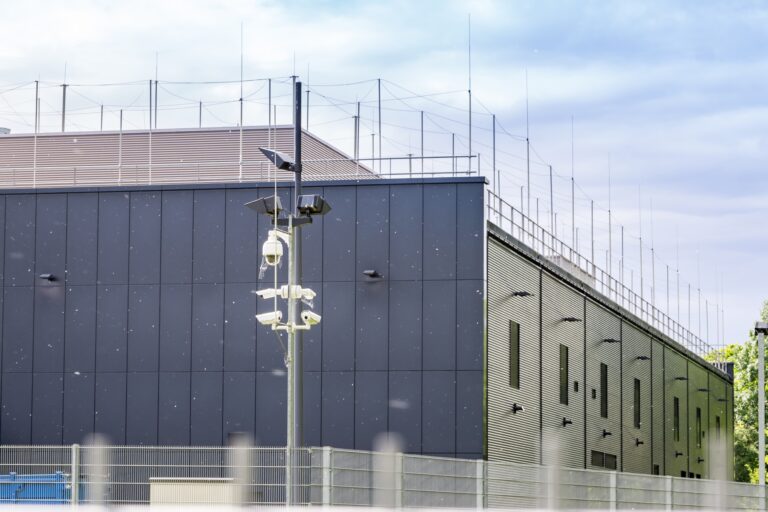
Mixed-use industrial facilities combine offices, warehouses, and factories, each with very different energy needs. Some areas run heavy machinery around the clock, while others only power lights, computers, and HVAC systems. Managing these varying demands can create high energy bills and frequent power challenges.
For example, a 500-acre site might run forklifts in the warehouse while engineers work in office spaces nearby. Production bay lights stay on 24 hours a day, but the office wing shuts down at 6 p.m. Some days the facility uses just 300 kilowatts, while during peak periods, demand can spike to 1.5 megawatts. This kind of fluctuating energy use is typical for mixed-use sites and can drive costs higher if the power system is not designed to handle it efficiently.
Rising Costs and Growing Risk for Mixed-Use Facilities
Electric rates for U.S. manufacturers have risen steadily, with a 13 percent increase since 2022, according to the Energy Information Administration (EIA, 2025). At the same time, facility downtime is becoming more costly, as even brief outages can disrupt production, spoil inventory, and drive up operating expenses. Traditional “grid plus diesel genset” setups no longer meet these challenges. Generators consume large amounts of fuel, produce higher emissions, and make it difficult to control energy costs. For this reason, forward-looking operators are adopting hybrid systems that combine solar panels, battery storage, intelligent controls, and smaller, cleaner backup generators alongside the utility feed.
Why Traditional Power Systems Struggle in Mixed-Use Facilities
Traditional power setups often fail to handle the varying energy demands of offices, warehouses, and production areas. Camali Corp helps clients like cold-storage depots and light-assembly factories reduce facility energy costs by implementing hybrid power systems. These combine solar panels, battery storage, intelligent controls, and backup generators to manage daily use and respond to energy spikes.
Hybrid systems also offer financial advantages. The federal Investment Tax Credit allows businesses to claim 30 percent of a commercial solar project’s cost, lowering upfront expenses. Accelerated depreciation through MACRS lets companies write off equipment faster, improving cash flow. Batteries reduce peak demand charges, and intelligent energy management keeps operations reliable and costs predictable.
Many facility managers are unsure where to start. Should solar cover daytime production loads? Is a one-hour or two-hour battery the right size? Do you ditch your diesel genset or keep it for rare multi-day outages? The good news: there’s a straightforward framework to answer all of those questions, and we’re about to walk through it step by step.
Why Mixed-Use Industrial Sites Need a Hybrid Power Strategy
Mixed-use industrial facilities place very different demands on power systems. Office areas rely on lighting, computers, and HVAC, while warehouses and light manufacturing spaces draw heavy loads from motors and equipment. This mix creates uneven energy use throughout the day.
Utilities bill facilities based on both kilowatt-hours, which measure total energy used, and peak demand in kilowatts, which tracks the highest power draw during a short window. Solar power lowers overall energy use, but it does little to control peak demand. Batteries fill that gap by covering short bursts of high load and helping avoid costly demand charges. When paired with an Energy Management System (EMS), facilities can shift lower-cost off-peak grid power into their busiest hours.
Together, these tools create a hybrid power strategy that delivers lower and more predictable energy costs than relying on the grid alone.
Core Pieces of a Modern Industrial Power Setup
2.1 Grid Supply & Smart Tariffs
You’ll still lean on the utility for baseline power. But shifting to a “time-of-use” or “real-time pricing” tariff, paired with an EMS, knocks 3 to 8 percent off bills before you install a single panel.
2.2 On-Site Solar PV (Roof & Carport)
Rooftop and carport solar systems are commonly sized between 250 kW and 2 MW for facilities ranging from 100,000 to 1 million square feet. Solar offsets daily energy use and lowers long-term operating costs. Carport systems add the bonus of shaded parking, which improves site usability while generating power.
2.3 Battery Energy Storage Systems
Batteries are typically sized to handle about half to two-thirds of a facility’s peak demand, with one to two hours of storage. Their main role is to shave short power spikes, shift solar energy to high-use periods, and reduce demand charges. Batteries also provide quiet, instant backup for critical spaces like IT rooms and cold-storage compressors.
2.4 Backup Generation & Reliability
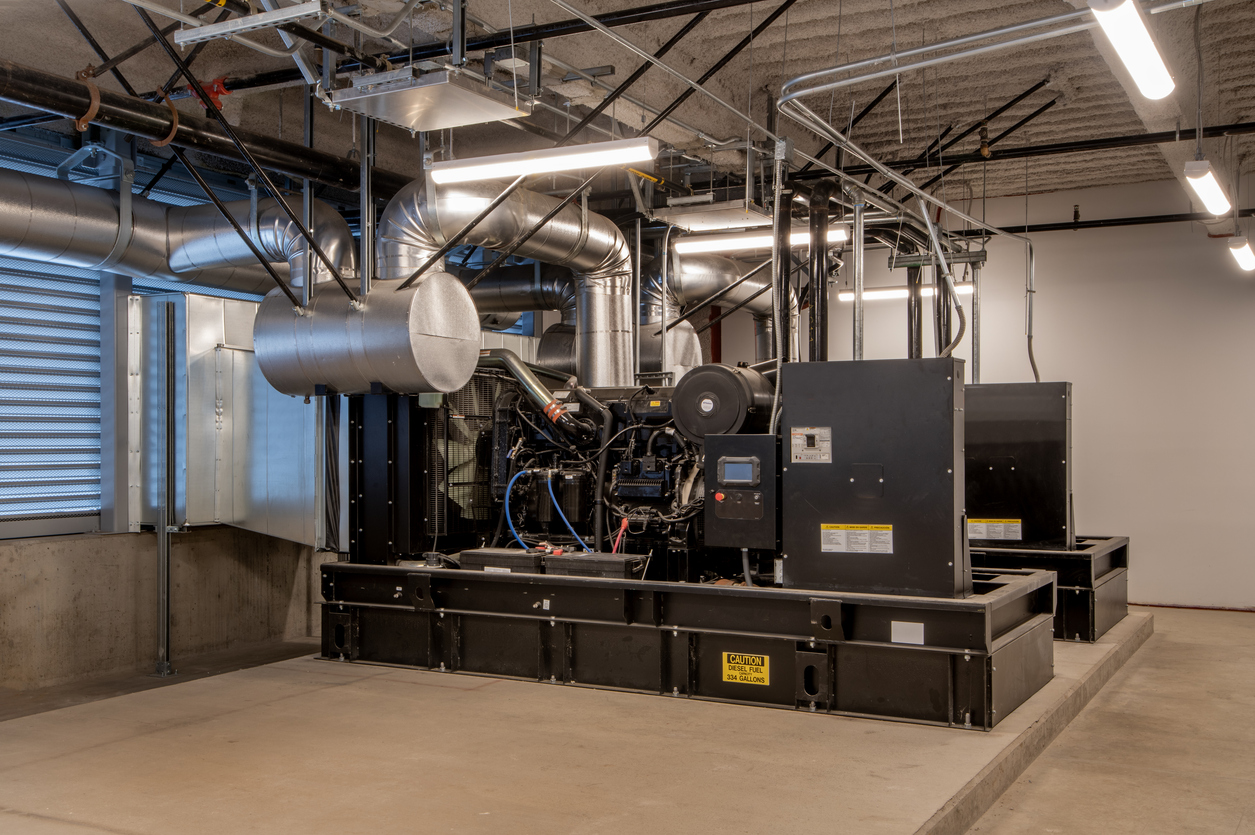
Even with solar and batteries, most codes still require a standby generator for life-safety loads. Switching from diesel to natural gas (or renewable diesel) can cut NOx emissions by up to 90% and makes permitting easier and faster.
2.5 Energy-Management System (EMS)
The Energy Management System ties everything together. It monitors utility pricing, solar output, and battery charge levels, then decides which power source to use in real time. By constantly selecting the lowest-cost option, the EMS helps stabilize energy costs and improves the return on every part of the system.
A 6-Step Framework to Design Your Ideal System
Designing a reliable and cost-saving power system takes more than guesswork. At Camali Corp, we use a proven 6-step process to build the best hybrid setup for your mixed-use facility.
- 30-Day Load Audit: We install portable submeters to measure energy use in production areas, HVAC systems, and office spaces. This helps us understand your real power needs.
- Roof & Site Assessment: We check the structure of your roof, shade levels, and connection points. We also evaluate nearby carports and land, these often provide more solar capacity than the roof alone.
- Financial Modeling: We create a detailed Net Present Value model estimates long-term savings using projected utility rates, available incentives, and the estimated value of your battery system after 10 years.
- Technology Stack Selection: We match the right combination of solar panels, batteries, backup generator, and EMS software. Right-sizing your system is more cost-effective than oversizing it.
- Permitting & Interconnection: We work with your utility company early in the process. In many states, projects under 5 MW can qualify for a fast-track approval process.
- Build, Commission & Monitor: Camali manages the entire EPC process (Engineering, Procurement & Construction), files for all available incentives, and provides 24/7 monitoring. Everything is included under one SLA (Service Level Agreement, which defines system uptime and support) to ensure your savings are real, and visible on your utility bill.
ROI Breakdown: Costs, Incentives & Payback Math
Example Scenario
Facility: 500,000 sq. ft. mixed-use campus in Ohio
Upfront Costs –
- 1.2 MW DC solar (rooftop + carport): $1.7M
- 2 MWh lithium-ion battery system: $1.1M
- EMS, switchgear, and SCADA (a control system that manages power in real time): $350K
- Federal 30% Investment Tax Credit + bonus depreciation: -$730K
Total Net Capital Expense: $2.42M
Year 1 Savings
- Energy arbitrage (using cheaper off-peak energy): $180K
- Demand-charge reduction (lower fees during peak use): $220K
- Outage avoidance (based on a 7-hour average outage): $80K
Total Year 1 Savings: $480K
Simple Payback: 5.0 years
25-Year Internal Rate of Return (IRR): 18%
With state battery incentives (like NYSERDA’s $85/kWh rebate), payback can drop below 4 years.
Questions to Ask Before You Pick a Technology Partner
- Can you deliver solar, storage, EMS, and backup under one contract?
- Will you model multiple utility tariffs, including future tariff risk?
- Do you guarantee kWh and demand-charge savings in writing?
- How do you handle battery augmentation after year 10?
- Can your EMS integrate future EV-charging stations or hydrogen fuel cells?
Next Steps & How Camali Corp Can Help
Camali Corp designs and delivers hybrid power systems for complex mixed-use facilities where uptime and cost control matter. Our approach improves reliability, reduces energy waste, and limits dependence on diesel without overbuilding infrastructure.
Want to see how it works for your facility? Book a free 30-minute assessment or call us at (949) 580-0250. We will review your load profile and deliver a custom ROI snapshot within a few business days.