The elevators are packed, the coffee makers are humming, and your tenants’ data centers are spinning up for the day. Suddenly, click. Half the building goes dark. Breakers trip, alarms sound, tenants are calling, and every minute of downtime costs real money. Moments like these usually trace back to one unsung hero hidden in a closet or basement: the main electrical panel. Most owners don’t think about it until it fails. By then, you’re into emergency calls, after-hours rates, and angry occupants.
The good news? Catastrophic shutdowns are preventable. In our 30+ years servicing commercial properties across the Northeast, Camali Corp has identified nine unmistakable signs that your panel is overdue for an upgrade, and acting early can save you on reactive repair costs.
Why Your Electrical Panel Is the Heart of the Building
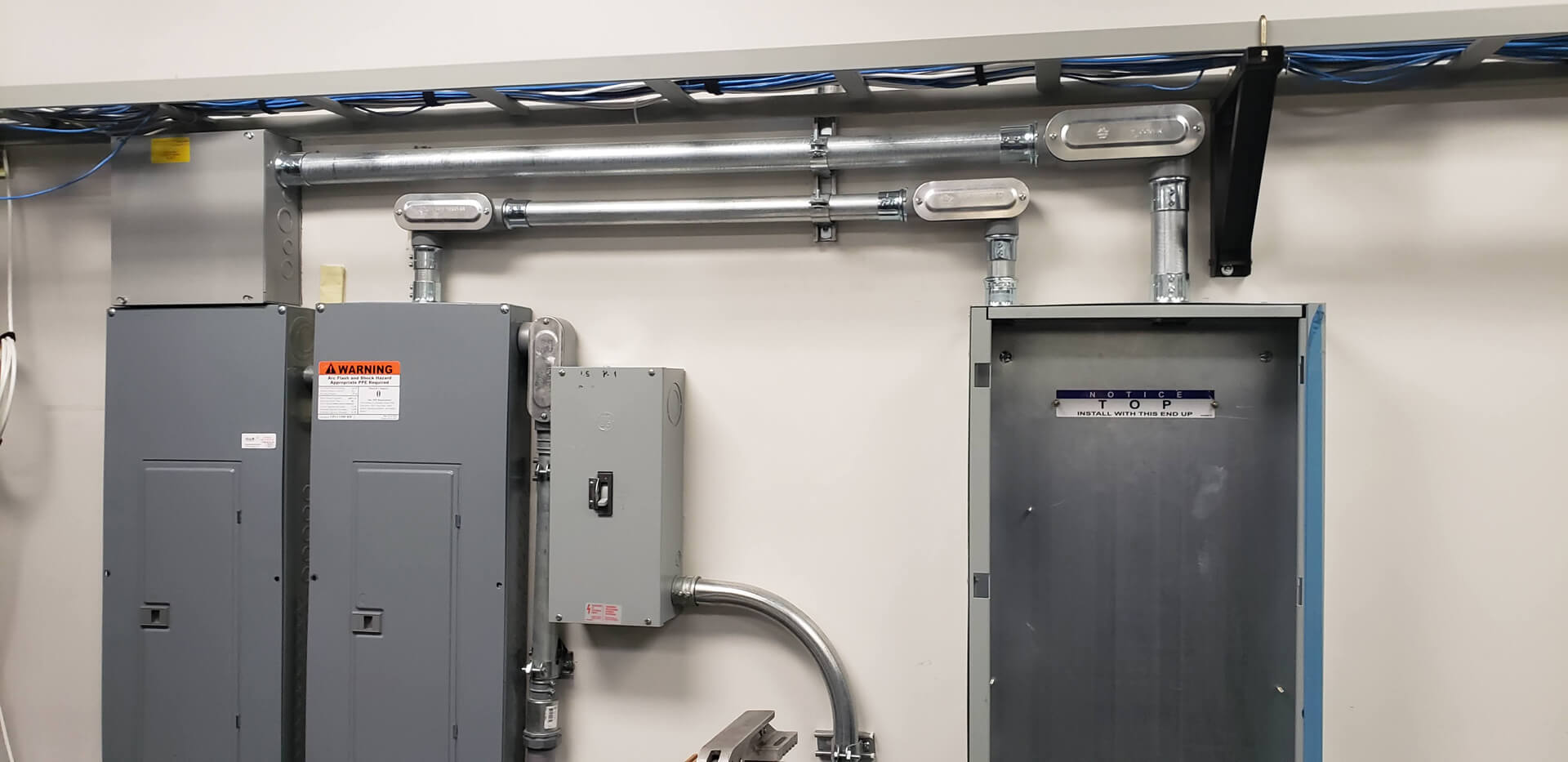
An electrical panel, sometimes called a breaker box or switchboard, is the distribution hub that channels utility power to every circuit in the facility. Modern offices run triple the electrical load they did just 20 years ago thanks to EV chargers, HVAC upgrades, and rows of servers. If the panel can’t safely handle the amperage, heat builds, breakers wear out, and your risk of arc-flash events skyrockets.
In the 2017–2019 period, the USFA estimates that electrical malfunctions, such as short circuits or wiring problems, accounted for 8% of nonresidential building fires. In short, a healthy panel means uptime, safety, and code compliance.
9 Warning Signs You Need an Electrical Panel Upgrade
1. Frequent breaker trips
If you’re resetting breakers monthly, or worse, weekly, the circuits are running beyond rated capacity. Breakers protect conductors, but repeated tripping weakens their internal springs and can mask larger load-imbalance problems.
2. Flickering or dimming lights
Voltage drops signal that conductors or bus bars are undersized for demand. You’ll often see this when elevators or large motors start.
3. Warm or buzzing panel
Heat and audible hum indicate loose lugs or deteriorating insulation. Infrared scans over 104 °F (40 °C) are a red flag.
4. Added high-load equipment
New rooftop HVAC units, commercial kitchens, or Level-2 EV chargers can each add 40–80 amps. If these were tied into spare breakers without calculating full-load electrical capacity, you’re gambling with capacity.
5. Outdated fuse box or less than 200 A capacity
Many mid-century panels max out at 100–150 amps. Today’s mid-size office easily requires 400 amps. Fuses are also slower to clear faults and are more prone to human error.
6. Insurance or code violations
Carriers routinely deny claims if the panel hasn’t been upgraded within NEC cycles (every three years). Local AHJs may tag your CO until you bring service up to code.
7. Tenant complaints & downtime
Lost retail sales, server crashes, or elevator outages are early-warning economics. If downtime exceeds 1% of business hours, your electrical infrastructure is a likely culprit.
8. Renovations & expansions
Any project adding 10%+ square footage or a change of occupancy (e.g., warehouse to lab) triggers an NEC load calculation that often reveals the need for a service upgrade.
9. Electrical testing reveals overload
Annual thermography or power-quality studies that show over 80% continuous load on the main breaker indicate you’re out of headroom.
What the National Electrical Code (NEC) & NFPA 70B Require
The 2023 NEC introduced stricter rules for surge protection (Article 230.67) and energy-monitoring transparency (Article 220). While the code itself doesn’t set calendar deadlines for panel replacement, it does require that any additions or repairs bring the entire service entrance up to current standards.
Meanwhile, NFPA 70B now classifies electrical maintenance as a “shall” rather than “should.” Translation: If your panel lacks space for a Type 2 SPD or fails infrared inspection, you’re required to fix it. OSHA can cite General Duty Clause violations for known electrical hazards, and fines average $14,300 per incident. Upgrading the panel eliminates these liabilities in one project.
Cost, Downtime & ROI: What Building Owners Can Expect
Commercial electrical panel upgrades can vary a lot in price. A small retail space may spend around $3,000, while a large building with high-rise main switchgear may spend over $10,000. The total cost usually depends on a few key factors, including the amperage of the panel, the service voltage needed (such as 208V, 480V, or 600V), and whether the project needs metering equipment or CT cabinets. The timing of the shutdown also matters because work done at night or on weekends can increase the cost.
Even with these factors, the actual downtime can be very short. With the right temporary generator setup, the upgrade can be completed in as little as four hours. Many Camali Corp clients also see strong long-term benefits after upgrading their panels. On average, they experience a 35 percent drop in nuisance breaker trips, 25 percent lower insurance premiums over three years, and a 3.4-year payback period when they include energy-efficiency credits and fewer emergency calls.
The Upgrade Process with Camali Corp (Step-by-Step)
- Load Study & Infrared Scan — We benchmark current draw and hot spots.
- Engineering & Permits — PE-stamped drawings meet local AHJ & utility specs.
- Select Switchgear — We source panels from Siemens & Eaton with 20-year lifecycle support.
- Schedule Shutdown — Typically Friday 10 p.m.–Saturday 6 a.m. with generator back-feed.
- Execute Upgrade — Remove old gear, land conductors, torque to spec, install SPDs.
- Testing & Commissioning — Megger tests, thermal imaging, and utility witness.
- Training & Documentation — As-builts, breaker directory, and maintenance plan.
FAQs About Electrical Panel Upgrades
How long does a commercial panel last?
With regular maintenance, switchgear lasts 25–30 years. Beyond that, parts become obsolete.
Can I add subpanels instead?
Only if the main still has 20% headroom. Otherwise you’re deferring the inevitable.
Do tenants have to leave the building?
No, our temporary gensets keep critical loads online, so occupants can stay or return by Monday.
Ready to Future-Proof Your Building?
Don’t wait for the next breaker trip to shut down operations. An upgraded electrical panel is the cheapest insurance you’ll ever buy. Camali Corp’s NABCEP-certified electricians handle everything, from load study to last bolt, so you can focus on running the building.
Request a free load assessment or speak to our engineering team at (949) 580-0250.