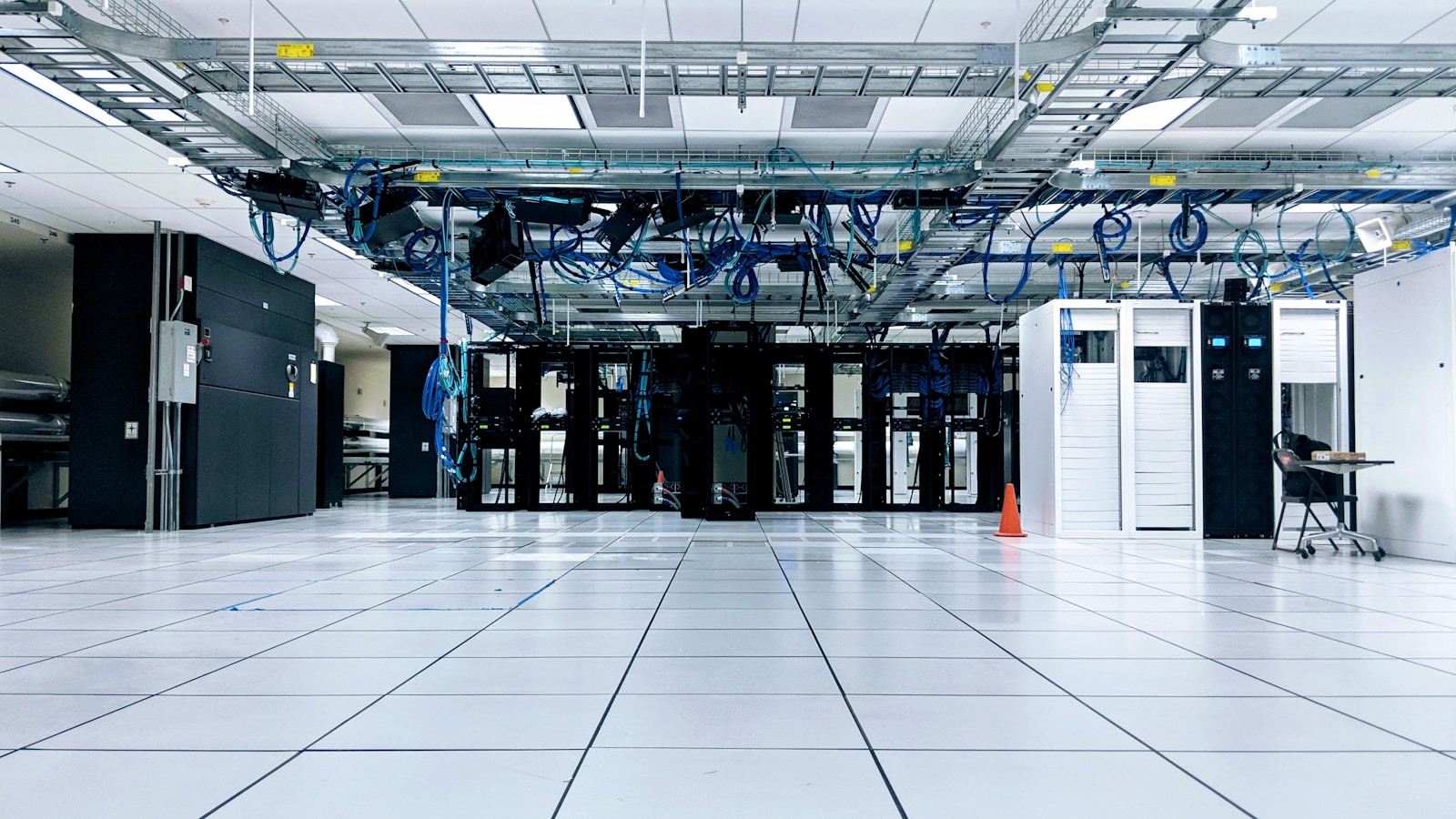
As technology changes fast, businesses must be ready to grow without rebuilding their systems every few years. That means designing infrastructure that can expand smoothly, handle higher demand, and adapt to new workloads without driving up costs or hurting performance.
Scalable infrastructure is built by planning ahead. It relies on modular design, flexible software control, built-in redundancy, and automation that allows systems to grow step by step instead of all at once. When scalability is part of the design from day one, organizations can respond to change with confidence instead of scrambling to catch up.
What Does Scalable Infrastructure Really Mean?
Scalable infrastructure means systems that can handle more or less work without losing quality, performance, or service level agreements (SLAs), which are contracts that set uptime and performance promises. It’s the difference between building a foundation that crumbles under pressure and one that adapts and strengthens as demands grow.
Think of it like designing a highway system. You don’t just build for today’s traffic. You plan for future growth, alternative routes, and the ability to add lanes when needed. The same principle applies to data center infrastructure.
The Two Types of Scaling
Infrastructure scalability generally follows two approaches: vertical scaling and horizontal scaling. Vertical scaling, often called scaling up, increases the power of a single server by adding more CPU, memory, or storage. While this method is simple to implement, it is limited by hardware capacity and can create a single point of failure.
Horizontal scaling, or scaling out, expands capacity by adding more servers to the system. This approach improves reliability, supports long term growth, and is better suited for modern distributed environments where uptime and flexibility matter most.
Core Principles of Scalable Infrastructure Design
1. Modular Architecture: Building Blocks for Growth
Scalable infrastructure starts with modular architecture. Instead of relying on large all in one systems, modular design uses standardized components that can be added, replaced, or upgraded as needs change. This approach shortens deployment timelines, simplifies operations, and limits the impact of failures by isolating issues to individual modules.
Prefabricated modular data centers (PFMs) are a common example of this strategy in action. These pre-engineered systems combine power, cooling, and safety features into repeatable units that can be deployed much faster than custom built facilities. Modular design allows organizations to scale capacity in phases without overbuilding or disrupting existing operations.
2. Software-Defined Infrastructure (SDI)
Software-defined infrastructure separates hardware from control through virtualization and centralized management software. This allows computing, storage, and networking resources to be pooled and adjusted automatically based on demand.
With SDI, teams can manage multiple environments from a single interface, deploy resources on demand, and maintain consistent configurations across locations. Automation reduces manual effort, lowers the risk of human error, and helps infrastructure scale quickly without increasing operational complexity.
3. Redundancy and High Availability
Scalable infrastructure must be resilient. Redundancy ensures systems remain available even when components fail. This starts with power design, where models such as N plus one or two N provide backup capacity through Uninterruptible Power Supply (UPS) systems, backup generators, battery energy storage systems (BESS), and automatic transfer switches (ATS).
Network redundancy is equally important. Multiple data paths, redundant network interfaces, diverse internet providers, and failover mechanisms prevent single points of failure. Storage redundancy completes the picture by protecting data through techniques such as RAID, distributed storage, geographic replication, and cloud backups. Together, these layers support high availability while allowing infrastructure to grow safely over time.
Designing Network Infrastructure for Scale
Network design is often the biggest challenge when scaling operations. Modern scalable networks require careful planning and the right architecture.
High-Speed Interconnects and Bandwidth Planning
Modern data centers are moving beyond traditional 10 GbE and 40 GbE to support 100, 400, and even 800 GbE connections. This shift is largely driven by AI and machine learning workloads, which demand massive data movement and low-latency performance.
Industry research shows that AI workloads already account for a significant share of new data center demand, with estimates suggesting that roughly one-quarter of current capacity is now dedicated to AI-driven computing, and that share is expected to grow rapidly as enterprises compete for AI-ready infrastructure.
This big jump in bandwidth supports AI and machine learning workloads, real-time data processing, high-frequency trading applications, and video streaming at scale.
Network Topology for Scalability
Traditional three-tier hierarchical networks struggle as environments grow. Modern scalable network design relies on architectures built for consistent performance and simple expansion.
Spine-leaf architecture is now the standard for scalable data centers. Every server connects evenly through leaf switches to multiple spine switches, creating predictable latency and non blocking traffic. Capacity scales horizontally by adding switches, making growth faster and less disruptive.
For multi site operations, software-defined wide area networking (SD-WAN) improves scalability by dynamically routing traffic based on performance and application needs. Centralized control increases reliability while reducing operational and connectivity costs.
Load Balancing Strategies
Effective load balancing supports scalable infrastructure by spreading traffic across systems and preventing performance bottlenecks as demand increases.
Round-robin load balancing distributes requests evenly across available servers, making it simple and reliable for steady workloads. Geo-aware routing directs users to the closest data center to reduce latency and improve response times. Health-check based load balancing continuously monitors system status and sends traffic only to healthy servers, protecting uptime during failures. Application-aware load balancing prioritizes traffic based on business rules, ensuring critical workloads maintain performance as usage grows.
Storage Solutions That Scale
Data is growing faster than ever, so having storage systems that can scale is essential for long-term success.
Distributed Storage Systems
Modern distributed storage systems are designed for linear scalability, allowing organizations to add capacity by simply adding nodes. This architecture improves fault tolerance by ensuring data remains available even if individual components fail. Performance stays consistent through parallel processing across multiple devices, while cost efficiency improves by relying on commodity hardware instead of proprietary systems.
Data Tiering Strategies
Data tiering strategies help balance performance and cost by placing data in the appropriate storage tier. Tier 0 (Hot Data) includes mission critical workloads stored on high performance SSDs. Tier 1 (Warm Data) consists of frequently accessed information stored on standard SSDs or fast HDDs. Tier 2 (Cool Data) is placed on standard hard drives for occasional access, while Tier 3 (Cold Data) is archived on tape or cloud storage for long term retention.
Virtualization and Containerization: The Scalability Multipliers
Virtualization and containerization play a major role in building infrastructure that can grow without disruption.
Virtualization Benefits
Virtualization improves resource optimization by allowing servers to run at 70 to 80 percent utilization, compared to 15 to 20 percent on physical servers. It supports rapid provisioning by launching new services in minutes instead of days, while hardware independence makes it easy to move workloads across different platforms. By reducing the number of physical servers, virtualization also lowers power, cooling, and space costs.
Hyperconverged Infrastructure (HCI)
Hyperconverged infrastructure combines compute, storage, and networking into software-defined building blocks managed through a single interface. This approach supports linear scaling by adding nodes to increase both capacity and performance. By eliminating storage area networks (SANs) and complex networking setups, HCI reduces complexity and speeds up deployment through pre-configured systems.
Containerization and Microservices
Containerization increases scalability by sharing the host operating system, which improves resource efficiency and reduces overhead. It allows rapid scaling by adjusting individual microservices instead of entire applications. Containers also support DevOps workflows and offer strong portability across on premises, cloud, and hybrid environments.
Energy Efficiency and Environmental Considerations
Scalable infrastructure must be sustainable. Data centers consume about 1 percent of global electricity, making energy efficiency critical for both cost savings and environmental impact.
Green Design Strategies
Green design strategies focus on building only what is needed through modular deployment, selecting energy-efficient hardware such as ENERGY STAR certified equipment, and applying liquid cooling for high-density workloads to manage extreme heat efficiently. Integrating renewable energy sources like solar or wind further reduces environmental impact. Optimizing Power Usage Effectiveness, or PUE, with ratios closer to 1.0 maximizes overall efficiency.
Sustainability Metrics and Monitoring
Monitoring and tracking sustainability metrics ensures long-term performance. Real-time power monitoring shows energy usage as it happens, while carbon footprint analysis measures emissions by application. Automated power management reduces waste without manual intervention, and predictive analytics helps plan for future capacity needs.
Automation: The Key to Managing Scale
As infrastructure grows, managing it manually becomes impossible. Automation is the key to keeping operations consistent and efficient at scale.
Infrastructure as Code (IaC)
Infrastructure as Code treats setup and configuration like software, enabling version control to track changes and roll back if needed, consistent deployments across all environments, automated provisioning for faster implementation, and documentation that serves as living records for the system.
Automated Scaling Policies
Intelligent scaling adjusts resources to match demand. Reactive scaling responds to current load, predictive scaling uses AI and machine learning to forecast future needs, scheduled scaling plans for known usage patterns, and cost-optimized scaling balances performance with budget considerations.
Security in Scalable Infrastructure
Security has to grow with the system. As infrastructure expands, the number of possible attack points also increases, making strong security design essential.
Zero Trust Architecture
Zero trust assumes no user or device is automatically trusted. Every access request is verified, users are granted only least privilege access, workloads are microsegmented to limit lateral movement if a breach occurs, and continuous monitoring detects and responds to threats in real time.
Compliance and Governance
As systems scale, following regulations and industry standards is essential. Strategies include automated compliance checking which ensures constant alignment, policy as code enforces consistent rules, audit trails provide detailed logs for reporting, and data encryption protects information both at rest and in transit.
Monitoring and Performance Management
As infrastructure scales, effective monitoring is essential to maintain high performance and reliability. Visibility into every system component ensures issues are detected early and operations remain smooth.
Key Performance Indicators (KPIs)
Tracking critical metrics helps optimize resources and service quality. Monitor CPU, memory, storage, and network usage to gauge resource utilization. Track application performance through response times and throughput, and ensure availability meets service-level agreements (SLAs). Analyze capacity trends to anticipate growth and plan for future needs.
Predictive Analytics
AI and machine learning enhance monitoring by predicting resource demand and spotting anomalies before they affect users. Systems can automatically adjust settings to optimize performance and match resources to actual usage, reducing waste and improving efficiency.
Best Practices for Implementation
Start with Assessment
Before building scalable infrastructure, begin by auditing current systems to understand existing capabilities and limits. Clearly define performance, capacity, and growth requirements, and identify constraints such as budget, timeline, and technical restrictions. Plan migrations in phases to minimize disruption and ensure a smooth transition.
Design for Flexibility
Design infrastructure with adaptability in mind. Use open standards to avoid vendor lock-in, and plan for multiple scenarios, including best-case, worst-case, and expected growth. Build in capacity headroom to handle unexpected demand, and document all configurations and procedures to guide future teams.
Test and Validate
Validation ensures reliability before full deployment. Run proof-of-concept trials to evaluate new technologies, perform load testing under normal and peak conditions, and regularly test disaster recovery plans. Conduct security testing frequently to identify vulnerabilities and strengthen protections.
The Future of Scalable Infrastructure
Edge Computing Integration
The growth of IoT and the demand for faster processing are pushing infrastructure to the edge. Scalable designs must manage data across multiple locations, maintain reliable connections even in weak networks, support remote management tools, and ensure stronger security in uncontrolled environments.
AI and Machine Learning Optimization
AI and machine learning will play a major role in improving infrastructure efficiency and reliability. Predictive maintenance helps prevent failures before they occur, while dynamic resource allocation optimizes performance in real time. Intelligent automation allows systems to self-adjust and self-repair, and AI-driven security detects and stops threats faster than traditional methods.
Building for Tomorrow, Today
Scalable infrastructure is not just about growth. It creates systems that adapt, evolve, and stay resilient. Start with modular architecture, backup systems, software-defined infrastructure, and monitoring, then add AI optimization, edge computing, and zero-trust security for long-term efficiency.
This is an ongoing process. Following these strategies ensures your systems meet today’s needs and are ready for tomorrow. Skipping scalability may save time now but will cost more later.